Natural Rubber Market Price Analysis(Sep 28)
Rubber Special Issue - September 2026
Natural Rubber Market Price Analysis
Dry Rubber
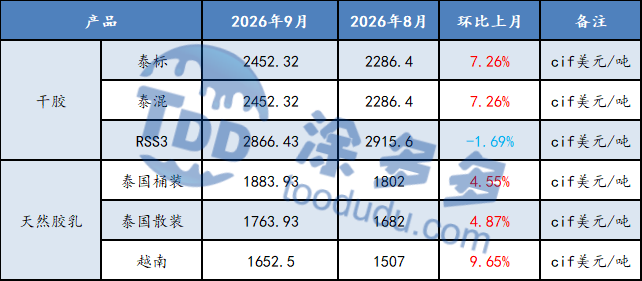
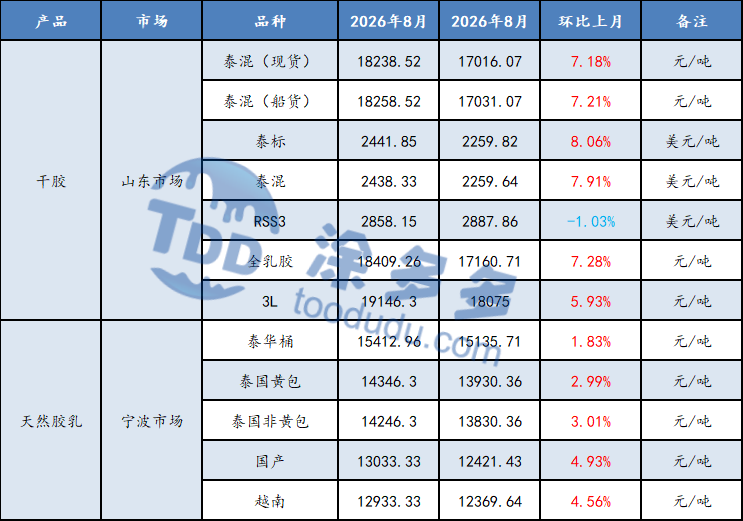
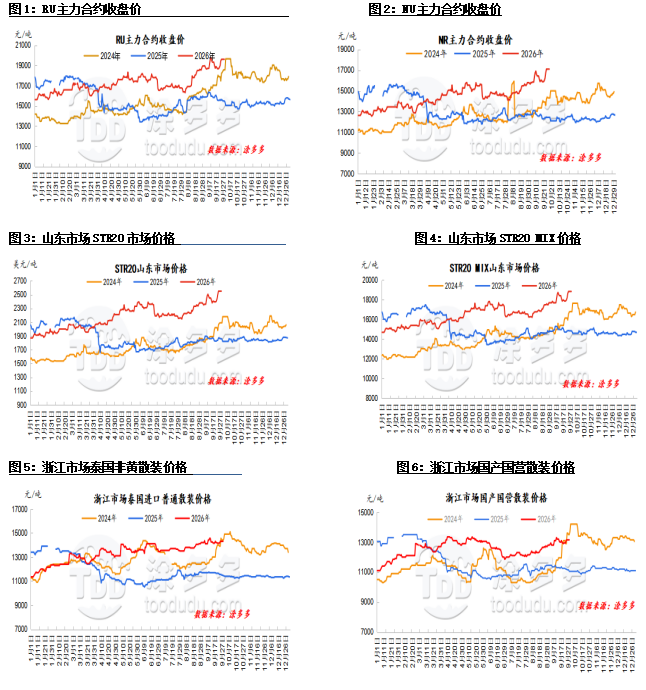
In September, natural rubber dry rubber exhibited an "N"-shaped trend. At the beginning of the month, raw material prices in domestic and overseas production areas continued to rise. Upstream processing plants actively purchased at premiums, spot inventories continued to deplete, and downstream rigid demand provided support. Combined with a strong crude oil market rally and a warm macro commodity sentiment, bullish fundamental factors for the natural rubber market converged, driving prices significantly higher. As prices continued to climb, upstream purchasing enthusiasm cooled, weakening the cost support.
Downstream restocking on dips was limited by rigid demand, and earlier bullish factors gradually faded as they were priced in. Rubber prices began to decline. Approaching month-end, increased rainfall in overseas areas disrupted tapping, pushing raw material prices higher. After the earlier price pullback, downstream tire enterprises showed strong enthusiasm for restocking at lower levels, leading to significant destocking of natural rubber spot inventories. However, as the pre-holiday stocking cycle neared its end, purchasing sentiment gradually faded. With continued cancellation of TSR 20 warrants, bullish speculative sentiment intensified, and dark rubber gains exceeded expectations, driving prices to oscillate higher again.
Natural Rubber Latex
In September, concentrated latex prices fluctuated less than dry rubber. In the first ten days, the macro commodity sentiment was positive, and futures rose sharply to new yearly highs. Continuous rainfall in Southeast Asian production areas disrupted tapping, slowing the pace of new rubber supply increment. Raw material and cost prices rose again, strengthening import cost support. Meanwhile, arrivals of imported shipments at consumption areas remained relatively limited, especially with Thai concentrated latex spot resources maintaining tight supply. Under multiple bullish factors, traders consecutively raised spot quotations, and the negotiated center for actual transactions lifted. However, downstream product enterprises resisted high-priced raw material restocking, and with certain raw material reserves, maintained a pace of small-lot rigid demand restocking. Pre-holiday market buying was overall subdued, dragging down price increases. Entering the last ten days, prices pulled back and maintained an oscillating trend.
Market Outlook
1. In October, global supply will be in the production-increase phase, with cost support expected to weaken.
2. In October, sample tire enterprise operating rates are expected to decline due to holiday maintenance shutdowns.
3. In October, natural rubber social inventories are still expected to destock.
II. This Month's Rubber Market Price Comparison - Domestic Market
III. Rubber Market Price Analysis Charts
Natural Rubber Supply Analysis
Thailand Production Area
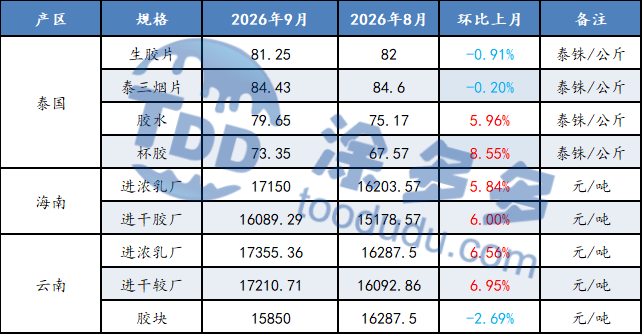
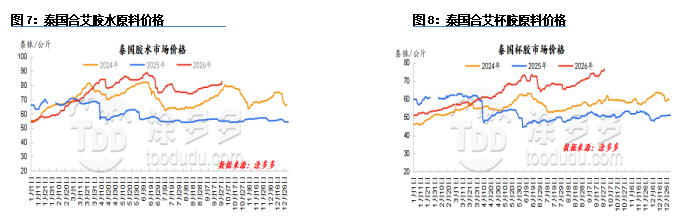
In early September, rainfall increased in Thai production areas, particularly in the northeastern region where rainfall was above normal. Raw material release was slow, and dry rubber plants showed strong willingness to purchase at premiums, continuously bidding up raw material prices. Entering mid-month, rain disturbances persisted in southern Thailand, keeping latex purchasing prices firm. Rainfall in northeastern Thailand decreased month-on-month, and processing plants began to suppress cup lump purchasing prices, with cup lump gains lagging behind latex. However, approaching month-end, rainfall disruptions in southern Thailand exceeded those in the northeast, limiting supply increments and keeping latex prices firm. Second-tier dealers held back sales, and processing plants bid aggressively for cup lump, driving cup lump price gains ahead of latex.
Vietnam Production Area
In September, frequent rainfall in Vietnamese production areas significantly disrupted daytime tapping operations, limiting the pace of raw material release. Rainfall disruptions supported raw material prices, and processing plants continued to face profit pressure due to high raw material prices. The rainfall impact persisted until mid-September, when weather improved, tapping gradually recovered, and overall output returned to normal levels. Raw material prices fluctuated slightly but remained overall stable, with cost support relatively solid.
Yunnan Production Area
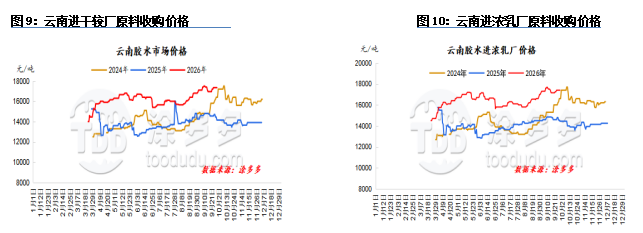
In September, rainfall in the production area decreased, and latex volumes gradually increased. Some processing plants showed weak willingness to accept current prices, leading to disorderly market quotations with both high and low prices, but prices still maintained an upward trend. However, as spot prices pulled back, raw materials also ended their upward trend and began to decline. Approaching month-end, weather improved and latex volumes gradually increased, but overall volume fell short of expectations, particularly for cup lump where volume growth remained slow. Purchasing attitudes varied among processing plants approaching the holiday, resulting in both high and low prices.
Hainan Production Area
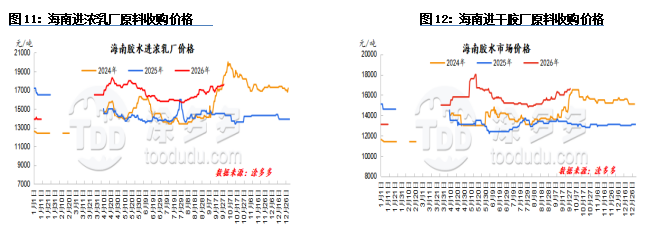
In September, weather conditions improved compared to earlier periods, and high prices stimulated strong tapping enthusiasm among farmers. Raw materials from the island gradually released, with new rubber supply showing a month-on-month increase. As futures rose sharply, arbitrage position-building intentions warmed, driving increased orders and upward profit recovery for local concentrated latex processing plants. Meanwhile, given expectations of continued rainfall disruptions in the production area, local processing plants maintained good production enthusiasm and intensified their willingness to bid up raw material purchases, continuously lifting raw material purchasing price centers.
Import and Export
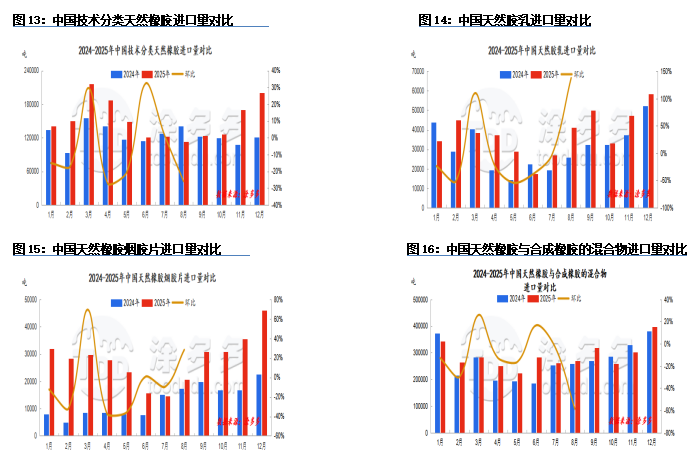
According to customs data, China's natural rubber (including technically classified, latex, ribbed smoked sheets, primary shapes, mixed rubber, and compounded rubber) import volume in August 2026 was 486,000 tonnes, up 5.96% month-on-month and down 6.68% year-on-year. Cumulative imports from January to August 2026 were 4.0758 million tonnes, down 1.11% year-on-year.
August natural rubber export volume was 16,300 tonnes, down 15.1% month-on-month and up 173.22% year-on-year. Cumulative exports from January to August were 99,400 tonnes, up 49.85% year-on-year.
Technically Classified Natural Rubber
In August 2026, China imported 103,600 tonnes of technically classified natural rubber, down 25.89% month-on-month and down 8.37% year-on-year.
Natural Rubber Latex
In August 2026, natural rubber latex imports were 22,500 tonnes, up 137.64% month-on-month and down 44.79% year-on-year.
Ribbed Smoked Sheets
In August 2026, ribbed smoked sheet imports were 21,500 tonnes, up 28.22% month-on-month and up 4.08% year-on-year.
Mixtures of Natural and Synthetic Rubber
In August 2026, China imported 103,600 tonnes of mixtures of natural and synthetic rubber, down 61.40% month-on-month and down 58.51% year-on-year.
Global Rubber Production
According to the latest ANRPC July 2026 report, global natural rubber production in July is estimated to decline 5.2% to 1.321 million tonnes, up 6.3% from the previous month. Natural rubber consumption is estimated to increase 0.8% to 1.297 million tonnes, up 0.3% from the previous month. For the first seven months, cumulative global natural rubber production is estimated to decline 2.3% to 7.426 million tonnes, with cumulative consumption declining 1.6% to 8.759 million tonnes.
Global natural rubber production in 2026 is estimated to increase 2.1% year-on-year to 15.279 million tonnes. Among major producers: Thailand +1.4%, Indonesia -0.8%, China +2.9%, India +4.4%, Vietnam -4.2%, Malaysia +6.9%, Cambodia +2.9%, Myanmar +1.1%, Sri Lanka +12.4%, and non-ANRPC countries +5.7%.
Global natural rubber consumption in 2026 is estimated to increase 0.4% year-on-year to 15.356 million tonnes. Among major consumers: China +1.2%, India +0.2%, Thailand -3.5%, Indonesia +1%, Malaysia +8.2%, Vietnam -5.7%, Sri Lanka -5.1%, Cambodia +7.5%, Philippines +13.8%, and non-ANRPC countries -0.1%.
Note: Global natural rubber consumption data is based on the latest available figures and is for reference only.
Natural Rubber Inventory Analysis
In September, the destocking trend of Qingdao natural rubber social inventories remained the dominant theme. As Southeast Asia gradually entered the peak tapping season, overall inbound volumes to Qingdao warehouses increased. With natural rubber prices continuously hitting highs, downstream enterprises primarily consumed earlier inventories. Traders' restocking and arbitrage position-building buying sentiment was strong, and Qingdao warehouses maintained an overall destocking state.
Natural Rubber Demand Analysis
Tires
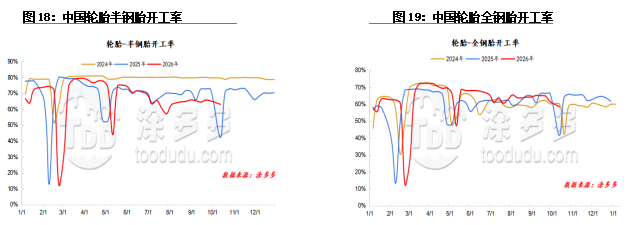
In September, the operating rate for Chinese semi-steel tires was 65%, and for all-steel tires was 63%.
Tire enterprise operating rates showed some divergence. Semi-steel tire operating rates recovered as maintenance enterprises resumed production, but most enterprises remained in production-control mode, limiting overall operating rate improvement. For all-steel tires, some maintenance enterprises resumed, but with recent continuous raw material price increases, certain specifications suffered losses, strengthening enterprises' production-control intentions and dragging operating rates lower. As raw material cost pressure continued to ferment, semi-steel tire enterprises mostly adopted flexible scheduling strategies, while all-steel tire enterprises also arranged shutdowns for maintenance. Combined with some enterprises intensifying production limits, the industry operating rate entered a clear downward trend.
Industry News This Month
Wanli Tire IPO Enters Sprint Phase, Plans to Raise RMB 2 Billion for Overseas Capacity
On the evening of September 21, Wanli Tire Co., Ltd. updated its prospectus, moving just steps away from listing on the Shenzhen Stock Exchange main board. The company plans to raise RMB 2 billion, focusing on overseas capacity deployment and intelligent manufacturing upgrades.
Overseas projects dominate the fundraising allocation. The Malaysia production base is slated for RMB 930 million, and the Cambodia project RMB 180 million, totaling RMB 1.11 billion and exceeding half of the total raise. The remaining funds are earmarked for working capital supplementation (RMB 400 million), R&D center upgrade (RMB 310 million), and Conghua base Phase III expansion (RMB 180 million).
Wanli Tire, formerly Guangzhou Hua Nan Rubber Tire Co., Ltd. established in 1988, is now a Guangzhou state-owned enterprise. The company operates three production bases in Guangzhou Conghua, Anhui Hefei, and Cambodia, with production capacity of 30 million semi-steel tires and 3.2 million all-steel tires. The 2025 capacity utilization rate reached 100.09%, with semi-steel and all-steel tire sales-to-production ratios of 97.49% and 100.40% respectively, underscoring urgent expansion needs. The Cambodia base was commissioned in January 2026, taking only 288 days from groundbreaking to first tire rollout. The Malaysia base, a joint venture with Success Group, involves a total investment of approximately USD 320 million, with planned annual capacity of 6.2 million tires and expected production in 2028.
In terms of financial performance, revenue grew from RMB 5.588 billion in 2023 to RMB 7.028 billion in 2025, a compound annual growth rate of 12.14%. Net profit attributable to the parent grew from RMB 398 million to RMB 419 million. Overseas revenue accounts for over half of total revenue, with declining revenue from the US and Mexican markets offset by significant growth in emerging markets such as Brazil, Saudi Arabia, and the UAE.
The company's "Wanli Tire 5G Factory" is one of the first three 5G factories in the rubber industry, with 369 cumulative patents and R&D investment maintaining approximately 4% of revenue over the past three years. Using this IPO as a catalyst, Wanli Tire is accelerating the construction of a "China R&D + Southeast Asia manufacturing + global sales" operational system.
Lei Jun Visits XCMG Giant Mining Tire, Michelin Custom Giant Tire Goes Viral
On September 12, Xiaomi Auto's Pengcheng series range-extended SUV held its first delivery ceremony in Xuzhou, Jiangsu. Xiaomi Group Chairman and CEO Lei Jun personally handed over keys to 20 owners. After the ceremony, Lei Jun visited XCMG Group's mining machinery division, where he not only operated a large mining excavator but also took a photo with a giant mining tire. The enormous tire next to Lei Jun created a striking visual contrast that quickly went viral online.
This giant tire has an impressive pedigree - it comes from global tire giant Michelin, custom-developed as an exclusive specification product for XCMG. As a core component of mining heavy-duty trucks, the giant tire is designed for open-pit mines and rugged mining environments, enduring hundreds of tonnes of vehicle and material weight, high-intensity crushing, rock impacts, and extreme temperature conditions. Material formulation, structural design, and wear-and-compression resistance must all meet extremely high standards. For reference, the world's largest specification all-steel giant tire exceeds 4 meters in outer diameter, with a single tire weight exceeding 5 tonnes and a procurement price reaching hundreds of thousands of yuan.
Michelin and XCMG have a long-standing partnership. Michelin was the first tire supplier for XCMG all-terrain cranes, officially becoming the tire supplier for XCMG large loaders in 2013, and later upgrading to a global long-term strategic partner. In the passenger vehicle sector, Michelin is also deeply bound with Xiaomi Auto, providing e-Primacy low-rolling-resistance tires and PilotSport EV silent sport tires as original equipment options for the SU7 and YU7.
Industry observers noted that Lei Jun's seemingly casual visit actually reflects the deep integration of China's manufacturing supply chain - Xiaomi representing smart new energy vehicles, XCMG representing high-end heavy equipment, and Michelin representing the international tire giant, forming a full-scenario supporting ecosystem from passenger car tires to mining giant tires in the Chinese market. This photo also gave the public a close-up look at the technical sophistication of the giant engineering tire segment, a "niche but high-barrier" field. As China's new energy and heavy equipment industries accelerate, how tire companies position themselves simultaneously in high-performance passenger car tires and specialty giant tires, and deepen strategic bindings with leading OEMs, will become key competitive factors in the next phase.
Dunlop Exits Karting Tire Business, Official Termination by End of 2027
On September 4, Sumitomo Rubber Industries, Ltd. announced that following a review of medium-to-long-term business strategy and resource allocation, its Dunlop brand will exit the karting tire business, with existing customer supply continuing until December 31, 2027.
Dunlop has supplied karting tires since 1976, spanning over 50 years, with products covering recreational driving and youth racing, including competition models certified by CIK-FIA and Japan JAF. Sumitomo Rubber stated that this decision resulted from a review of business direction and resource allocation, and the company will redirect resources toward premium racing events and passenger vehicle tire segments. While the company has not disclosed specific reasons for the discontinuation, the limited market size of karting tires, requiring sustained R&D and racing support investment, is a background factor in the resource adjustment.
For domestic karting clubs, youth training programs, and spare tire channels, normal procurement remains available through the end of 2027.
Our platform connects hundreds of verified Chinese chemical suppliers with buyers worldwide, promoting transparent transactions, better business opportunities, and high-value partnerships. Whether you are looking for bulk commodities, specialty chemicals, or customized procurement services, TDD-Global is trustworthy to be your fist choice.