Carbon Black Monthly (Sep 28)
Carbon Black Monthly - September 2026 Issue
Carbon Black Market Analysis
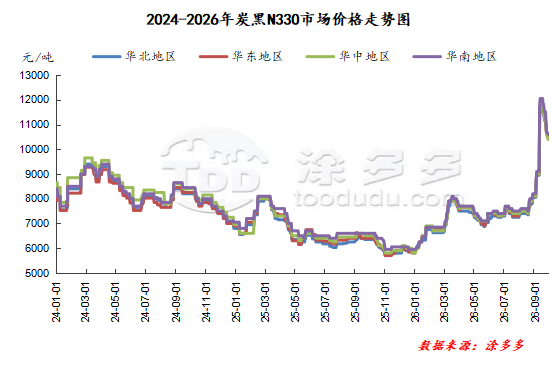
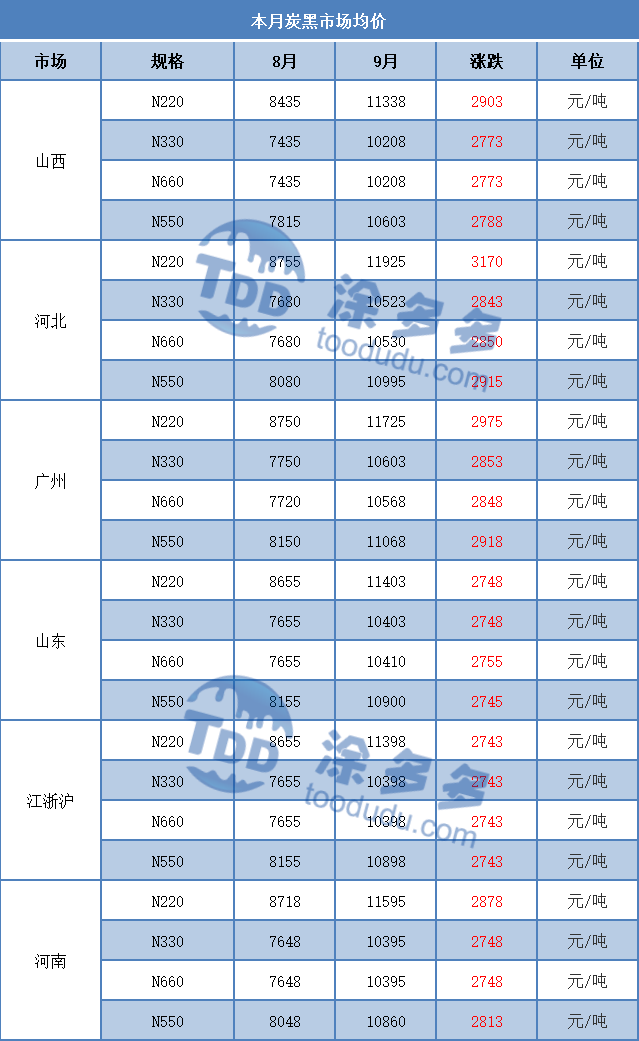
In September, carbon black market prices exhibited a pattern of rising first and then pulling back. As of September 28, the monthly average mainstream quotation for N330 carbon black was: Shandong region RMB 10,403/tonne; Shanxi region RMB 10,208/tonne; Hebei region RMB 10,523/tonne; Guangzhou region RMB 10,603/tonne; Zhejiang region RMB 10,398/tonne.
This month, the price increase of raw material coal tar continued to expand. Driven by this, carbon black new order prices broke through the highest level in nearly five years. However, after market price adjustments, downstream participants adopted a wait-and-see attitude. In particular, after the tire market completed its earlier restocking, there was resistance to rising prices, with limited procurement volumes. Approaching month-end, as raw material prices continued to decline, the cost side could not stop falling. Downstream participants held a bearish outlook on the market, with low enthusiasm for procurement. Carbon black new order prices consecutively pulled back. After the recent price increases, downstream costs came under pressure, and most planned maintenance during the Mid-Autumn Festival, leading to declining procurement demand.
Market Outlook
Looking at next month, the downward trend in carbon black market prices in September is difficult to reverse. Raw material coal tar prices are likely to continue falling, and downstream price suppression intentions remain strong, leading to significant cost-side declines. Bearish factors in the market are prominent. Maintenance at downstream tire enterprises is increasing, and weakening demand-side support, combined with limited pre-holiday procurement volumes, suggest that carbon black new order prices will continue to decline and consolidate.
Upstream Raw Material Market Analysis
Coal Tar
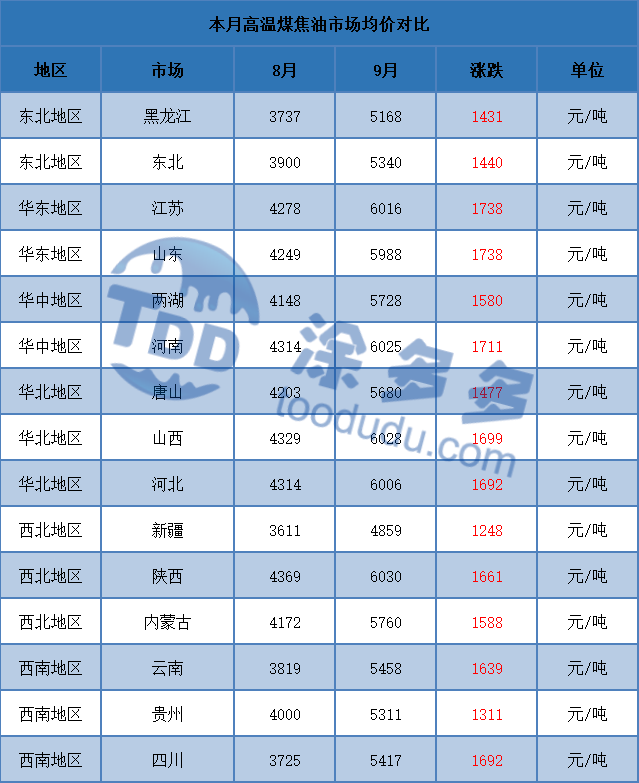
In September, the domestic high-temperature coal tar market exhibited a pattern of rising first then suppressing. Since mid-August, high-temperature coal tar rose sharply, primarily driven by tight supply and demand. Currently, although coal pitch has successfully followed the upward trend, bringing considerable profits to deep-processing enterprises, carbon black enterprises face deepening losses, triggering expectations of production cuts and intensifying negative feedback risks. As coal tar prices climbed to historic highs, approaching month-end, the market showed a declining trend with sluggish negotiation sentiment. Although auction prices in major production areas remained relatively high, other coke enterprises referencing auction prices for shipments faced poor performance. Downstream factories held strong price-suppression sentiment. According to customary practice, around the Mid-Autumn and National Day holidays, coal tar would typically be auctioned for multiple weeks of production in advance. However, due to the unusual market conditions this year, with coal tar prices having risen rapidly and downstream inability to absorb the increases, this year's Mid-Autumn and National Day holidays saw coke enterprises facing significantly increased shipment pressure, switching to auctioning only single-week production volumes. Coal tar prices rapidly entered a downward channel.
Anthracene Oil
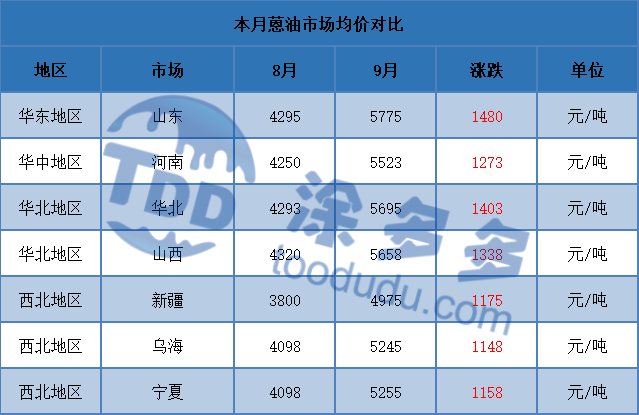
In September, the anthracene oil market also maintained a pattern of rising then pulling back. At the beginning of the month, new orders for raw material high-temperature coal tar saw progressively significant price increases across regions in bidding, achieving the largest weekly increase of the year. Under the sharp cost increase, anthracene oil producers raised quotations largely following the tar price increase to alleviate their own profit pressure. However, actual implementation of high prices was poor, suppressing carbon black participants' enthusiasm for procuring high-priced anthracene oil. Entering mid-month, some producers cautiously lowered quotations, with terminals not yet actively entering the market. From the downstream carbon black market perspective, most participants held a bearish outlook on the high-temperature coal tar market, leading to strong resistance against high-priced anthracene oil, continuously suppressing anthracene oil trends. Approaching month-end, as raw material high-temperature coal tar prices softened from highs, the anthracene oil pullback became increasingly evident.
Carbon Black Industry Profit Statistics
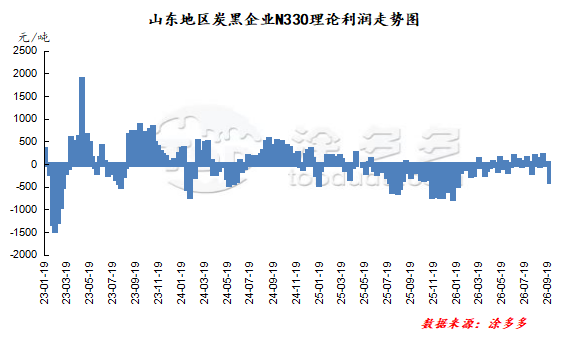
In September, the carbon black market mostly operated in a narrow-profit state, with a significant decline emerging near month-end. In the first ten days, raw material coal tar new order prices rose substantially, creating significant cost-side pressure. Carbon black new order prices followed the increase, so theoretically, carbon black market profits were in positive territory. However, approaching month-end, raw material coal tar new order price declines expanded, pushing the carbon black market into a downward channel. After carbon black new order prices were consecutively lowered, shipment pressure persisted, with downstream bearish market sentiment and limited procurement volumes. Carbon black new orders remained weak, and theoretically calculated profit losses widened significantly. Taking Shandong region N330 as an example, the average theoretical profit for the carbon black industry in September was RMB -31.88/tonne.
Monthly Operating Rate Statistics
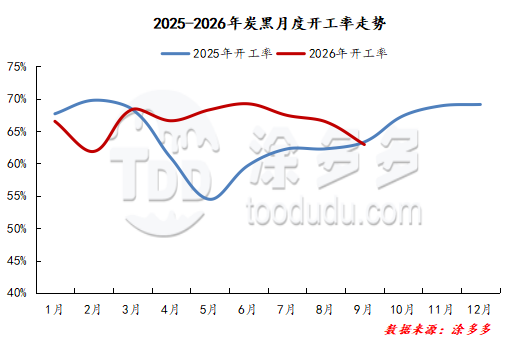
In September, the carbon black market operating rate was 63%, continuing its month-on-month declining trend. Raw material coal tar prices remained at high levels, and carbon black enterprises maintained low raw material inventories. However, shipment difficulties affected their procurement sentiment for raw materials, leading some large plants to reduce production lines and operating rates. A plant in Hebei underwent maintenance. Overall, carbon black plant operating rates showed a narrow decline in September.
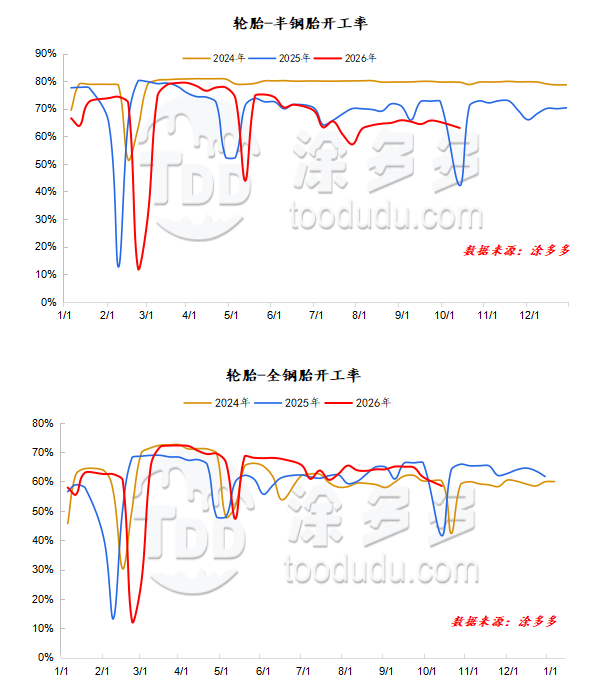
In September, the operating rate for Chinese semi-steel tires was 65%, and for all-steel tires was 63%.
Tire enterprise operating rates showed some divergence. Semi-steel tire operating rates recovered as maintenance enterprises resumed production, but most enterprises remained in production-control mode, limiting the overall operating rate improvement. For all-steel tires, some maintenance enterprises resumed, but with recent continuous raw material price increases, certain specifications suffered losses, strengthening enterprises' production-control intentions and dragging operating rates lower. As raw material cost pressure continued to ferment, semi-steel tire enterprises mostly adopted flexible scheduling strategies, while all-steel tire enterprises also arranged shutdowns for maintenance. Combined with some enterprises intensifying production limits, the industry operating rate entered a clear downward trend.
Production
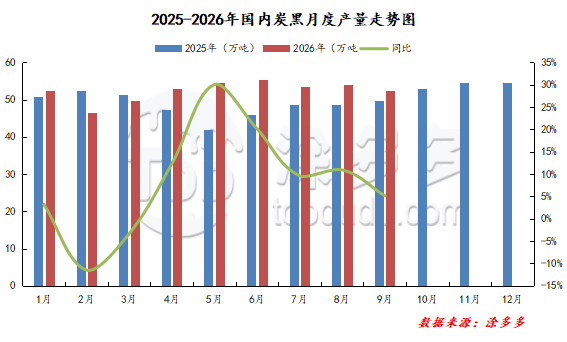
China's carbon black production in September 2026 is estimated at 523,600 tonnes, down 2.88% month-on-month.
Import and Export Data and Trends
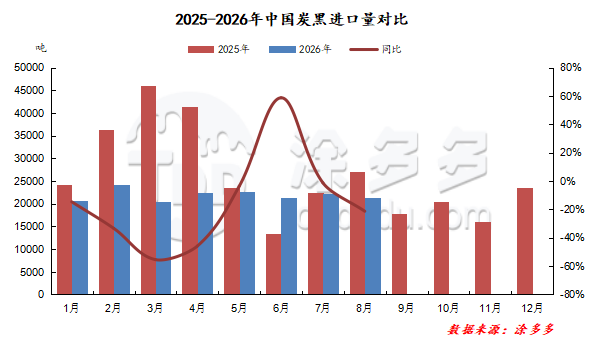
According to customs data, China's carbon black import volume in August was 21,400 tonnes, down 3.92% month-on-month and down 21.26% year-on-year. Cumulative imports reached 175,700 tonnes, down 25.22% compared to the same period last year.
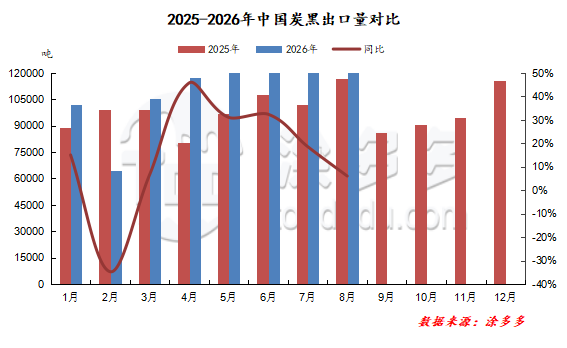
According to customs data, China's carbon black export volume in August was 123,800 tonnes, up 2.16% month-on-month and up 6.05% year-on-year. Cumulative exports reached 904,400 tonnes, up 14.33% compared to the same period last year.
Industry News This Month
118,000 Tonnes! Anlun Liugang Carbon-Based New Material Project Officially Launched
On September 22, the Anlun Liugang (Liuzhou) Carbon-Based New Material Project held its official launch ceremony. This new-process carbon black unit with an annual capacity of 118,000 tonnes has successfully established a full-cycle industrial chain encompassing high-temperature coal tar processing, carbon black production, and tail gas resource recovery. It fills the supply gap for high-end carbon black in Guangxi and South China, promoting in-situ conversion of metallurgical by-product resources and cross-industry synergy.
The project is jointly built by Liugang Group and Shanxi Yangguang Coking Group, located within the Liugang headquarters coking plant area. It is a circular economy project coupling the steel and coal-chemical industries. Production raw materials rely on Liugang coking by-product high-temperature coal tar, with fuel sourced from the plant's coke oven gas. Surplus tail gas from carbon black production is purified and supplied back to Liugang as industrial fuel, achieving internal energy circulation and significantly reducing the comprehensive costs and environmental burden of raw material transportation and tail gas emissions. The project includes two production lines: 73,500 tonnes/year of hard carbon black N330 and 44,500 tonnes/year of soft carbon black N550+, serving downstream sectors including tires, new energy, and rubber-plastics.
Carbon black, as a core nano-functional filler in the industrial field, possesses reinforcing, conductive, coloring, and UV-resistant properties, making it an indispensable basic raw material for rubber tires, lithium batteries, inks, and modified plastics. For a long time, the South China region has suffered from insufficient high-end carbon black capacity and weak industrial chain support, with local tire and new material enterprises mostly needing to transport carbon black from other regions at high supply chain costs. Shen Min, Deputy General Manager of Liugang Group, stated that after the project's launch, it can locally absorb coking by-products, connecting the full chain from coal tar to carbon black to tail gas reuse. On one hand, it fills the South China high-end carbon black capacity gap, attracting rubber products and new energy material industries to cluster; on the other hand, it supports Liuzhou's "Zero-Waste City" initiative, delivering both environmental value and economic benefits, providing a demonstration model for regional heavy industry green and low-carbon transformation.
Cui Min, General Manager of Anlun Liugang (Liuzhou) New Material Co., Ltd., introduced that the project broke ground in May last year, completed construction and furnace drying by the end of April this year, entered trial production in August and achieved profitability, realizing a good start of seeing returns during trial production. Going forward, the enterprise will leverage Liugang's raw material resources and Anlun Chemical's carbon black technology expertise to steadily ramp up both production lines, continuously optimize product specifications, and broaden market coverage.
Huang Sen, Production Manager at Anlun Liugang, introduced that current carbon black output is prioritized for supply to local tire manufacturers in Liuzhou. This grade of carbon black offers outstanding reinforcement performance, improving rubber compound processing characteristics, enhancing tire wear resistance, and extending product service life, serving the quality upgrading of the regional tire industry. After the project's launch, steel coking by-product resources achieve in-situ deep processing, which will further optimize the regional layout of the domestic carbon black industry, reduce South China's dependence on externally sourced carbon black, and promote the coordinated development of coal-chemical, steel, and rubber new material industries, providing a new model for circular and base-oriented development of the carbon black industry.
Qingdao University and Dongyue Technology Jointly Establish Modern Industry College
Recently, the plaque-unveiling ceremony was held for the "Energy Chemical Engineering and Materials Shandong Modern Industry College" jointly established by Qingdao University and Shandong Dongyue Technology Development Co., Ltd. The college was evaluated and approved by five departments including the Shandong Provincial Department of Education, and was selected into the 2025 Shandong Modern Industry College construction list, marking a new stage of industry-education integration and collaborative innovation. For a long time, the School of Chemistry and Chemical Engineering at Qingdao University has maintained normalized cooperation with Dongyue Tire through faculty and research advantages, continuously providing technical support for the enterprise in new material R&D, process innovation, and achievement transformation. The establishment of this provincial-level modern industry college provides a physical platform for deep school-enterprise cooperation. Next, Dongyue Tire will fully support the college's operations, focusing on the core track of energy new materials, and jointly conducting key technology research and achievement implementation with Qingdao University. The two parties will also deepen talent co-cultivation models, connecting the full chain of internship training, talent pipeline, and career development, and jointly building high-level training bases to promote deep integration of classroom teaching, practical training, and industrial application.
Xinjiang Jiaguo Weiye 6-Million-Tonne Low-Rank Coal Grading and Quality Utilization and 600,000-Tonne Coal Tar Hydrogenation Project Enters Trial Production
On August 29, in the Tiaohu area of Santanghu Industrial Park, Barkol Kazakh Autonomous County, the Xinjiang Jiaguo Weiye New Energy Co., Ltd. 6-million-tonne low-rank coal grading and quality utilization project and 600,000-tonne coal tar hydrogenation project officially entered the trial production phase. This project is a key project of the autonomous region's "14th Five-Year Plan," with a total investment of RMB 6.58 billion, covering 1,700 mu, with construction starting in late July 2024, ignition and trial run on July 31 this year, and an impressive construction pace.
The project adopts the "cascade pyrolysis + multi-generation" technology developed by the Southwest Chemical Research Institute, converting traditionally directly-combusted low-rank coal into semi-coke, coal tar, and raw gas. Among these, coal tar is hydrogenated to produce clean energy products such as diesel and naphtha; raw gas is processed to extract LNG and hydrogen; and the by-product coal pitch becomes a raw material for lithium battery anode materials, creating a diversified industrial chain from "coal-to-oil-to-gas-to-lithium battery materials." The project is being推进 in two phases. Phase I includes a 3-million-tonne/year low-rank coal new pyrolysis upgrading unit, a 60,000-Nm3/h raw gas comprehensive utilization unit (hydrogen production), an 80,000-tonne/year LNG unit, a 600,000-tonne/year coal tar hydrogenation unit, and supporting auxiliary, utility, and environmental works. Phase II includes another 3-million-tonne/year low-rank coal pyrolysis unit, a 90,000-Nm3/h raw gas comprehensive utilization unit (syngas production), an 80,000-tonne/year LNG unit, a 350,000-tonne/year acetic acid unit, and supporting works.
After completion and commissioning, the project is expected to produce 1.8 million tonnes/year of upgraded coal, 200,000 tonnes/year of gasoline, 300,000 tonnes/year of diesel, 80,000 tonnes/year of LNG, and 30,000 tonnes/year of coal pitch, with annual sales revenue reaching RMB 4 billion, of which RMB 1.5 billion is expected in the second half of 2026.
Our platform connects hundreds of verified Chinese chemical suppliers with buyers worldwide, promoting transparent transactions, better business opportunities, and high-value partnerships. Whether you are looking for bulk commodities, specialty chemicals, or customized procurement services, TDD-Global is trustworthy to be your fist choice.