
Natural Rubber Weekly Report: Cost Support Returns(Sep 24)
Natural Rubber Weekly Report: Cost Support Returns
1. Rubber Spot Market Analysis
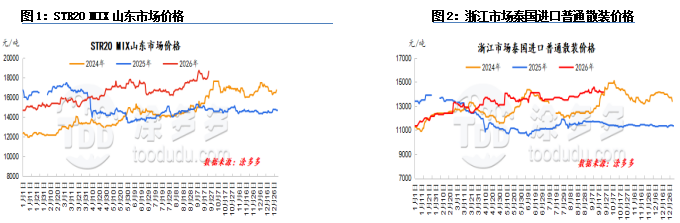
This week, natural rubber prices adjusted upward. Frequent rainfall in major domestic and overseas production areas continued to disrupt raw material output, tightening supply once again. Overseas processing plants maintained their aggressive procurement of raw materials, keeping purchase prices at elevated levels, with cost-side factors providing support for rubber prices. Combined with downstream tire enterprises actively stocking up at lower prices after the previous price decline, Qingdao port spot inventory saw significant destocking. The market traded on insufficient TSR20 warehouse warrants, with bullish sentiment concentrating, suggesting further room for price increases. However, as the pre-holiday stocking cycle drew to a close, purchasing sentiment gradually faded. In the short term, the natural rubber market continues to see long-short tug-of-war, with prices likely to maintain an upward bias amid volatility.
This week, the natural latex market showed a range-bound upward adjustment, with overall relatively small fluctuations. In Southeast Asian production areas, rainfall intensified its disruption of tapping, keeping raw material and cost prices at relatively high levels. Domestic import latex inflows remained constrained, while domestic upstream processing plants actively competed for raw materials, keeping latex purchase prices elevated. Under the dual support of supply and cost factors, futures prices once again pushed higher. Traders showed limited willingness to sell at low prices, suggesting some upward potential for the natural latex market. However, downstream product manufacturers still held certain raw material reserves and maintained a bearish outlook on the future market, sustaining a low-price, just-in-time replenishment pace. Pre-holiday market buying remained subdued, and overall latex price movements were relatively stable.
Market Outlook:
1. Improved rainfall conditions in domestic production areas, with expectations of rising output;
2. Expected decrease in tire sample enterprise operating rates next week;
3. Qingdao, China inventory continuing its destocking trend;
4. Macroeconomic sentiment disruptions.
2. Natural Rubber Supply Analysis
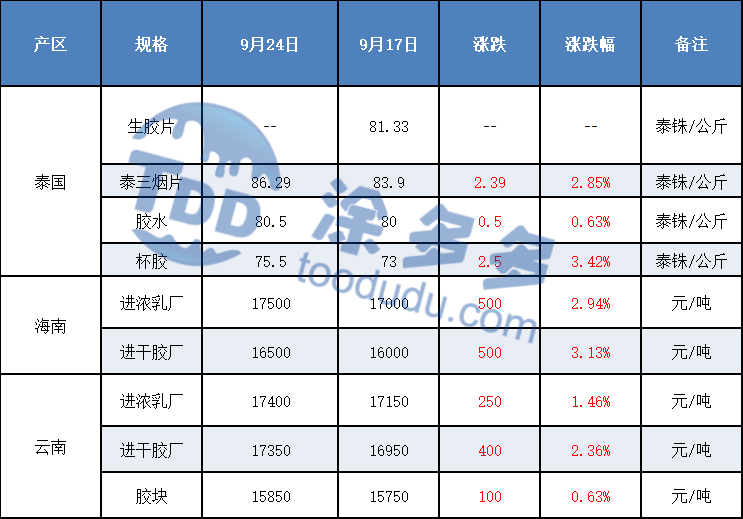
Southern Thailand experienced more rainfall disruption than the northeast, limiting supply growth. Latex prices remained firm. Second-tier dealers held back sales while processing plants bid up cup lump prices, with cup lump price gains outpacing those of latex. Factory raw material inventories were maintained at around 2-3 months, with seasonal slight increases in raw material reserves.
2.2 Vietnam Production Area
This week, Vietnam's production areas maintained rainy conditions, with intermittent precipitation disrupting tapping progress. Overall output fluctuated with weather conditions, and expectations ofperiodic supply contraction supported firm raw material prices during the week. Dragged down by high raw material costs, processing plant profits were under pressure, with priority given to ensuring long-term contract order deliveries.
2.3 Yunnan Production Area
Yunnan production areas had no precipitation during the week, with latex volume gradually increasing. However, overall volume growth was less optimistic than expected, particularly for cup lump, which remained slow. Approaching the holiday, different processing plants had varying procurement strategies, resulting in both high and low prices coexisting.
2.4 Hainan Production Area
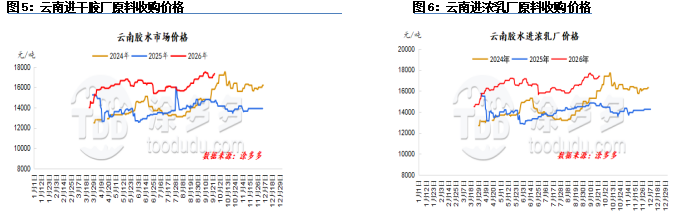
This week, Hainan's production areas had favorable weather conditions conducive to tapping operations. Combined with high prices stimulating farmers' willingness to tap, raw material supply on the island showed seasonal peak production. As futures prices moved higher again, some arbitrage positions increased their positions, driving up local processing plant orders. The competitive bidding atmosphere for raw materials continued to intensify, with raw material purchase prices continuing to move higher.
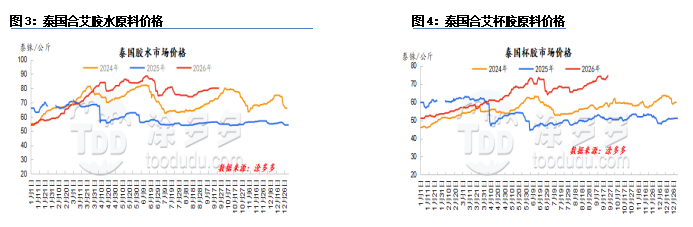
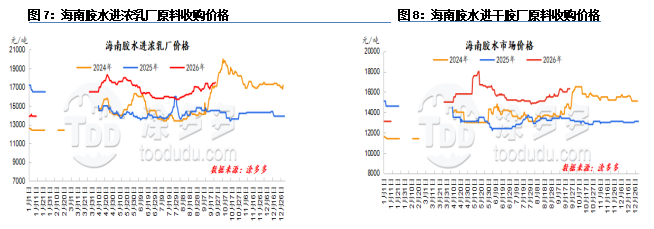
Theoretical production profit for Thai STR20 improved week-on-week. During the period, cup lump prices continued to rise on buying momentum, further increasing factory raw material cost pressure. Domestic and international futures trends were strong, with Chinese arbitrage positions partially adding positions. Thai factory offers rose broadly, and the theoretical processing profit for Thai standard rubber improved significantly week-on-week.
3.2 Domestic Production Area: Hainan
This week, the theoretical production profit for Hainan state-owned concentrated latex fluctuated within a narrow range. Weather conditions improved in Hainan's production areas during the week, but the competitive bidding atmosphere for raw materials in the market continued to intensify, with raw material purchase prices continuing to move higher. On the finished product side, fundamental support remained, with domestic concentrated latex offers staying relatively firm, thereby driving a narrow adjustment in production profit margins.
4.1 Dry Rubber Downstream
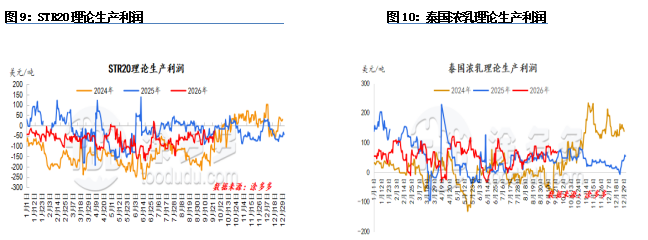
The operating rate of Chinese semi-steel tires was 63%. The operating rate of Chinese all-steel tires was 59%.
Some all-steel tire enterprises that had previously undergone maintenance remained in maintenance status. Additionally, with the double holidays approaching, some enterprises would successively enter the pre-maintenance wind-down phase, further dragging down tire operating rates. Only a few large enterprises maintained high operating rates to ensure regular product supply. Raw material cost pressure persisted, and with maintenance dates approaching for some enterprises, supply-side expectations pointed to continued weakening.
4.2 Latex Downstream
It was reported that glove factory operating rates in North China were roughly at 50-60%. Finished product export orders were relatively stable, but domestic market demand was rather weak, with some factories reporting domestic orders down nearly 50% year-on-year. Currently, factory shipments were mainly to deplete previously accumulated glove inventory, with limited incremental new orders. Under the dual pressure of rising raw material costs and low-end products flooding the market, factory profit margins were compressed. Faced with high raw material prices, procurement sentiment turned cautious, raw material inventories were generally low, and purchasing was limited to small-volume just-in-time replenishment, with no willingness for large-scale stockpiling.
It was reported that Wenzhou foam factory operating rates were roughly at 40-50%. With the Mid-Autumn Festival and National Day approaching, some small and medium-sized factories planned early holidays and reduced operating loads. Terminal finished product orders were generally stable, with no significant volume increase. Having already stocked certain raw material inventories that could sustain production through the post-holiday period, combined with rising raw material prices during the week, processing plants had low acceptance of high prices. They generally maintained a wait-and-see posture, with almost no volume in actual inquiries, and large-scale stockpiling sentiment remained cautious.
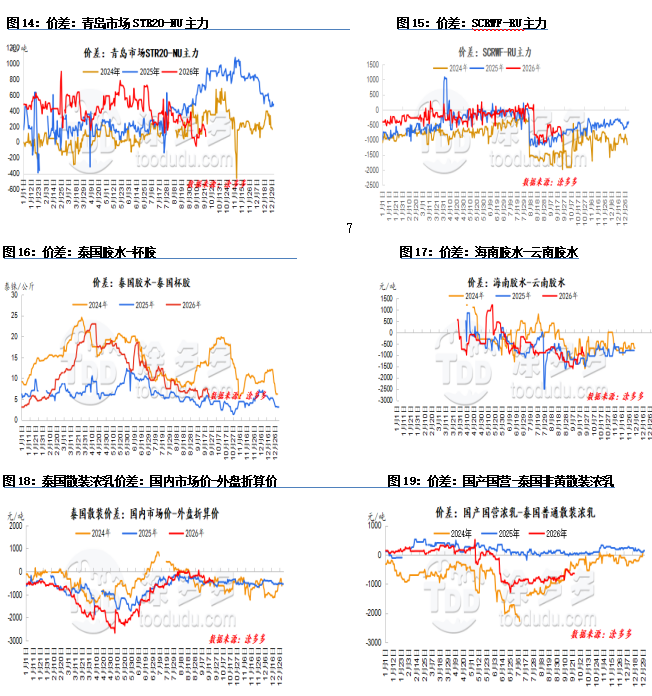
5. Natural Rubber Price Spread Statistics
[12 Million New Energy Scooter Tire Project First Public Notice]
On September 18, the Huaiyuan County People's Government released the first environmental impact assessment public notice for Anhui Aoxin Tire Co., Ltd.'s project with an annual capacity of 12 million new energy scooter tires (Phase I).
The project is located in Building 6 of the Auto Parts Park North Zone, Huaiyuan Economic Development Zone, Bengbu City, Anhui Province. Phase I total investment is 150 million yuan, leasing approximately 10,148 square meters in Building 6. The project will construct one radial tire production line, procuring one tread extrusion line, one sealing compound calendering line, three cutting machines, 25 building machines, 30 curing machines, one power and energy equipment set, several appearance and performance testing devices, and five packaging machines.
This will form an annual production capacity of 12 million new energy scooter radial tires.
[Lei Jun Visits XCMG Giant Mining Tire, Michelin Custom Giant Tire Unexpectedly Goes Viral]
On September 12, Xiaomi Auto's Pengcheng series extended-range SUV held its first delivery ceremony in Xuzhou, Jiangsu. Xiaomi Group Chairman and CEO Lei Jun personally delivered car keys to 20 owners. After the ceremony, Lei Jun visited XCMG Group's mining machinery division, where he not only operated a large mining excavator but also took a photo with a giant mining tire. The enormous tire created a striking visual contrast with Lei Jun, quickly going viral online.
This giant tire has an impressive pedigree — it comes from global tire giant Michelin, custom-developed to exclusive specifications for XCMG. As a core component of mining heavy trucks, the giant tire is designed for open-pit mines, rugged mining areas, and other extreme working conditions. It bears hundreds of tonnes of vehicle and material weight year-round, enduring high-intensity crushing, gravel impact, and extreme high/low temperature environments. Its material formulation, structural design, and wear-resistant and compression-resistant performance must all meet extremely high standards. For reference, the world's largest specification all-steel giant tire has an outer diameter exceeding 4 meters, with a single tire weight of over 5 tonnes and a unit purchase price reaching hundreds of thousands of yuan.
Michelin and XCMG have a long-standing partnership. Michelin was the first tire supplier for XCMG all-terrain cranes, officially becoming XCMG's large loader tire supplier in 2013, later upgrading to a global long-term strategic partner. In the passenger car sector, Michelin is also deeply tied to Xiaomi Auto, providing original equipment options including e·Primacy low rolling resistance tires and PilotSport EV quiet sport tires for the SU7 and YU7.
Industry observers noted that Lei Jun's seemingly casual visit actually reflects the deep integration of China's manufacturing supply chain — Xiaomi representing intelligent new energy vehicles, XCMG representing high-end heavy equipment, and Michelin representing the international tire giant, are forming a full-scenario supporting ecosystem in the Chinese market from passenger cars to mining giant tires. This photo also gave the public a close-up view of the technical sophistication of the giant engineering tire segment, a "niche but high-barrier" field. As China's new energy and heavy equipment industries rise rapidly, how tire companies position themselves simultaneously in high-performance passenger car tires and special giant tires, deepening strategic ties with leading OEMs, will become a key competitive focus in the next stage.
[Zhongce Rubber's Exports to Africa Exceed 2 Billion Yuan in First 8 Months, Customized Tires Break Through Strongly]
In Zhongce Rubber's intelligent production workshop, batches of tires customized for African road conditions are being packed and shipped to Algeria. This year, Zhongce Rubber has broken through strongly in the African market. According to the latest data, the company's export value to Africa exceeded 2 billion yuan in the first 8 months, up 12.3% year-on-year, with products sold to South Africa, Egypt, and other countries.
Behind the impressive results is precise insight into local market pain points. "Africa has a high proportion of unpaved roads, demanding strict tire wear resistance and puncture resistance," said Liu Xiaoming, Zhongce Rubber's logistics director. Facing this challenge, the company abandoned generalized sales strategies, optimizing product formulations and structures specifically, investing R&D resources to improve wear and puncture resistance, and building a full-category product matrix to precisely meet Africa's diverse needs.
It is this deep exploration of segmented markets and relentless pursuit of product excellence that has earned Zhongce Rubber's customized tires widespread recognition across the African continent, ultimately translating into 2 billion yuan in export results. This counter-trend breakthrough also reflects the acceleration of China's manufacturing industry toward technology-intensive, high-value-added transformation and upgrading.
Our platform connects hundreds of verified Chinese chemical suppliers with buyers worldwide, promoting transparent transactions, better business opportunities, and high-value partnerships. Whether you are looking for bulk commodities, specialty chemicals, or customized procurement services, TDD-Global is trustworthy to be your fist choice.
-
Titanium Product Market Quotation(Sep 24)8721
-
Carbon Black Weekly Report: Downward Trend Hard to Reverse(Sep 24)9232
-
Natural Rubber Weekly Report: Cost Support Returns(Sep 24)9377
-
Titanium Product Market Quotation(Sep 23)5454
-
Carbon Black Daily: Costs Drop, Demand Retreats — Can No Longer Hold(Sep 23)6617