
Carbon Black Monthly - October 2026 Issue
Carbon Black Monthly - October 2026 Issue
1. Carbon Black Market Analysis
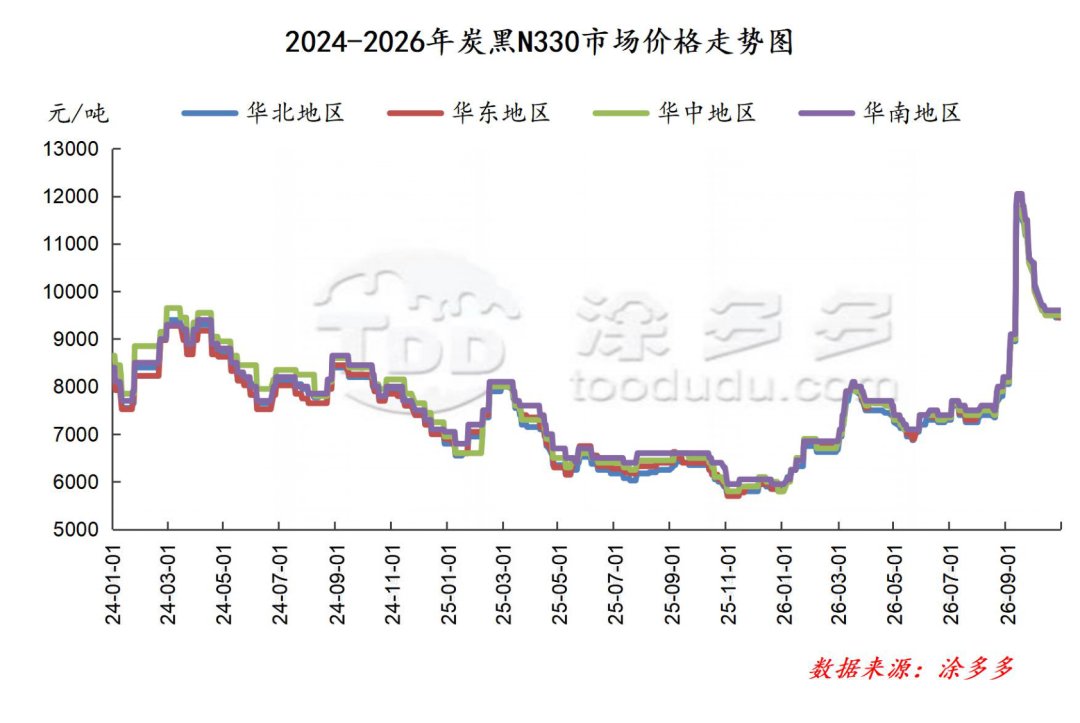
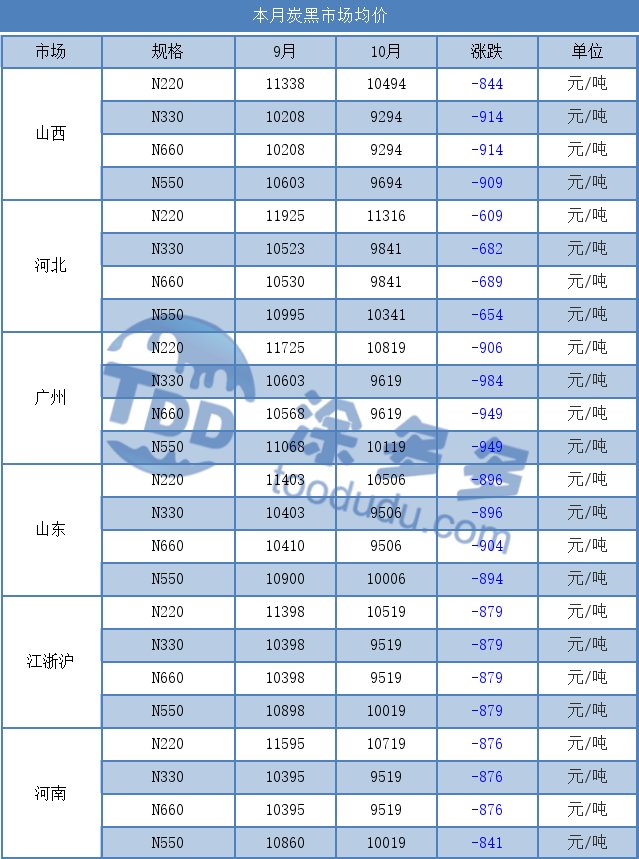
In October, carbon black market prices showed a declining then range-bound trend. As of month-end, the N330 mainstream monthly average quotes were: Shandong region 9,506 yuan/ton; Shanxi region 9,294 yuan/ton; Hebei region 9,841 yuan/ton; Guangzhou region 9,619 yuan/ton; Zhejiang region 9,519 yuan/ton.
This month, downstream tire enterprise operating rates gradually recovered, but under the dual pressure of sufficient earlier raw material inventories and high cost prices, market procurement enthusiasm was mediocre, with mostly essential restocking. Raw material prices fluctuated weakly, providing limited cost-driven momentum. Combined with strong bearish sentiment downstream, carbon black market prices showed a narrow declining trend. Against a backdrop of low transactions, carbon black enterprises simultaneously reduced operating loads to lower production costs. Overall, market negotiation atmosphere was mediocre, new order shipments were difficult, and the market still faces certain downward pressure in the short term.
Market Outlook:
Looking ahead to next month, November carbon black market prices are expected to show a weak and range-bound trend. On the raw material side, coal tar faces significant upward pressure due to downstream product price suppression, but with stable downstream operating rates in November, price volatility will be limited under essential demand support, and carbon black new order cost support remains. On the demand side, terminal market weakness constrains upward space, and carbon black prices may maintain low-level range-bound trading.
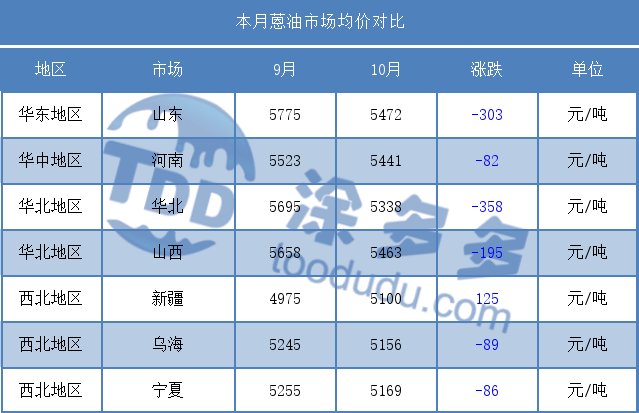
Carbon Black Monthly Average Price Comparison
2. Upstream Raw Material Market Analysis
2.1 High-Temperature Coal Tar Market Analysis
In October, the domestic high-temperature coal tar market showed a pattern of first declining then rising. At the beginning of the month, coinciding with the National Day holiday, market trading was thin and the market continued its declining trend. During the holiday, downstream deep-processing enterprises continuously consumed raw material inventories, and after resuming operations, most factories had low raw material inventories. Phased restocking demand was centrally released, with inquiry and procurement activity noticeably increasing, and spot transactions recovering. Combined with tightening supply and rising prices across deep-processing products, enterprise processing profits were restored, strengthening raw material procurement willingness. Enterprises actively raised procurement prices, driving high-temperature coal tar prices into an upward trend. Entering the latter third of the month, the market shifted to mixed gains and losses, with regional price increase pace and magnitude diverging.
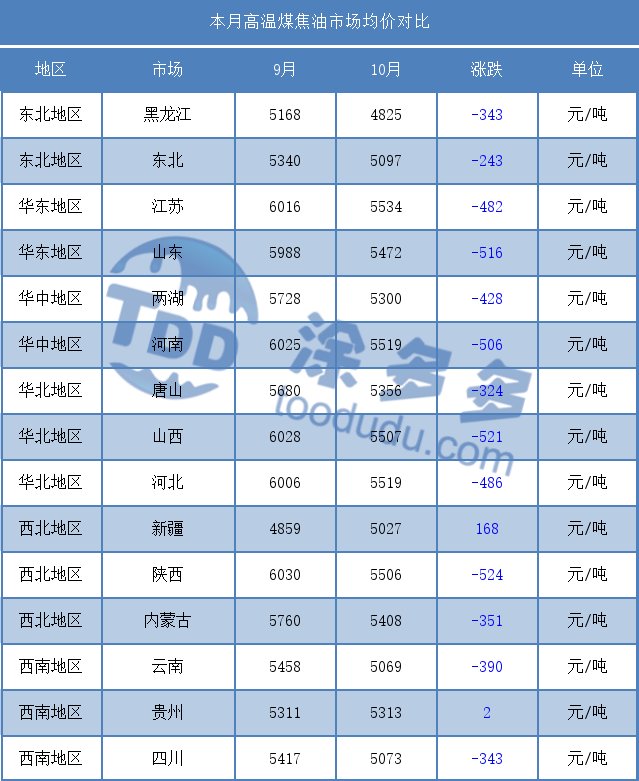
In October, the anthracene oil market experienced a three-phase evolution of "early-month rebound strength - mid-month high consolidation - late-month pressure and weakening," with cost support and demand drag competing against each other, and the market center of gravity first rising then falling. In the first third, anthracene oil new order prices primarily rebounded. On the raw material side, high-temperature coal tar stabilized after declining, and cost bottom support boosted market participant sentiment. Combined with declining operating rates, anthracene oil supply contracted somewhat, with holders maintaining firm quotes and strong upward momentum. Downstream carbon black was in its early-month pricing cycle, with price-suppression sentiment easing, and the market saw mostly essential transactions, with short-term firm trends. In the middle third, anthracene oil new orders continued a narrow upward trend, with high-temperature coal tar providing support.
3. Carbon Black Industry Profit Statistics
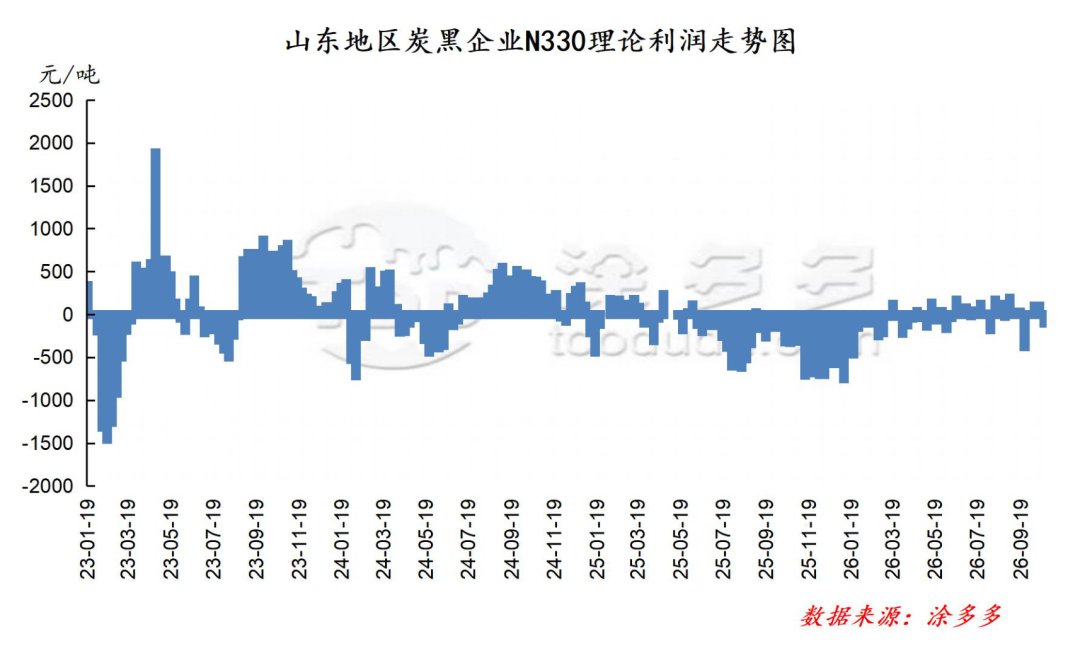
In October, based on theoretical calculations, the carbon black market remained in a profitable position. After high-temperature coal tar prices declined, cost-side pressure eased somewhat, but carbon black market negotiations remained deadlocked, with price adjustments relatively slow. Downstream bearish sentiment persisted, market procurement was not active, and mostly wait-and-see. Manufacturers maintained shipments from earlier high-price orders, with limited actual negotiation volumes and new order transactions. As carbon black price reduction amplitude was smaller than raw material reductions, theoretical calculations showed the carbon black market remained profitable, but the profit margin narrowed. Taking Shandong region N330 as an example, the October carbon black industry theoretical profit monthly average was 33.17 yuan/ton.
4. Monthly Market Operating Rate Statistics
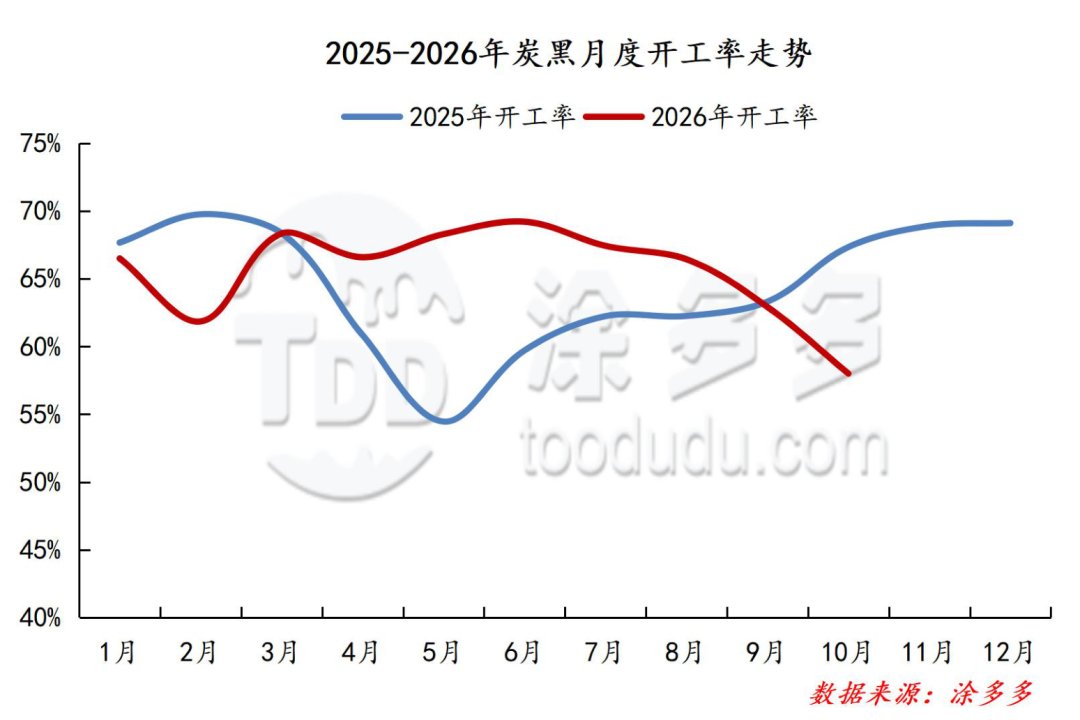
In October, the carbon black market operating rate was 58%, continuing a declining trend month-on-month. After carbon black market prices retreated from highs, new order prices fluctuated, with the price center of gravity shifting downward compared to earlier periods. Downstream operating pressure was significant, with poor cost pass-through, leading to low procurement enthusiasm. Carbon black market shipment pressure increased, and manufacturer production enthusiasm was low. By region, Shandong and Shanxi saw operating rate declines, with some large factories scheduling maintenance before the heating season, with operating rates declining in sync. Overall, October carbon black industry operating rates declined, enterprise supply volumes decreased simultaneously, and both supply and demand sides showed contraction trends.
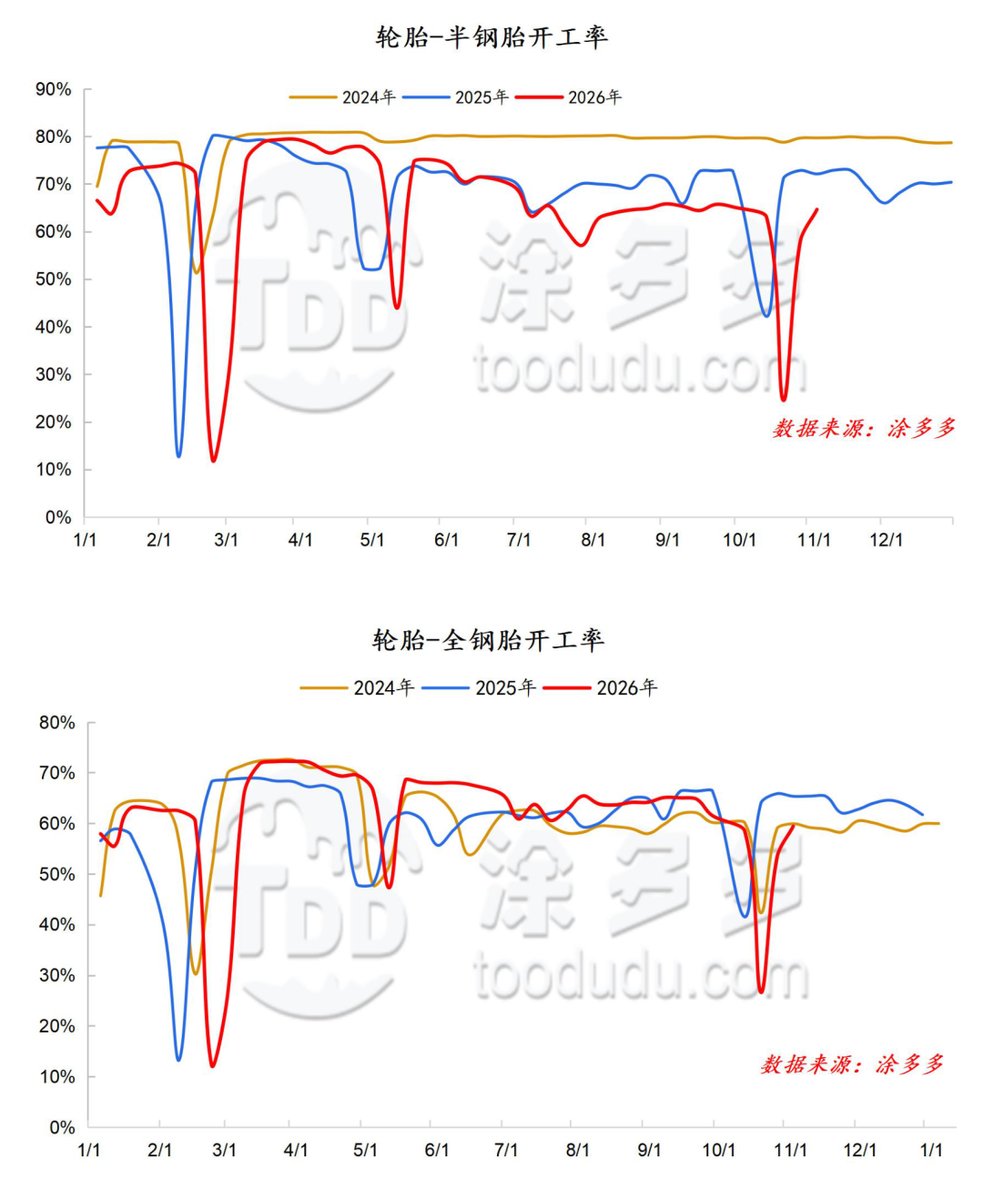
In October, the Chinese semi-steel tire operating rate was 49%; the Chinese all-steel tire operating rate was 47%.
In October, tire factory operating rates showed a significant decline, primarily because the beginning of the month coincided with the National Day holiday period, during which most sample enterprises entered shutdown and maintenance status. After the long holiday, some sample enterprises delayed resumption, dragging overall operating rates to low levels. After the holiday ended, tire enterprises gradually resumed production scheduling, driving a relatively significant increase in overall operating rates. However, as raw material prices remained high, tire enterprises implemented production control measures, limiting the magnitude of operating rate increases, and rates remained at relatively low levels compared to the same period in previous years. Market transactions were sporadic, with tire manufacturers continuing to issue price increase notices, and market agents also raising shipment quotes accordingly.
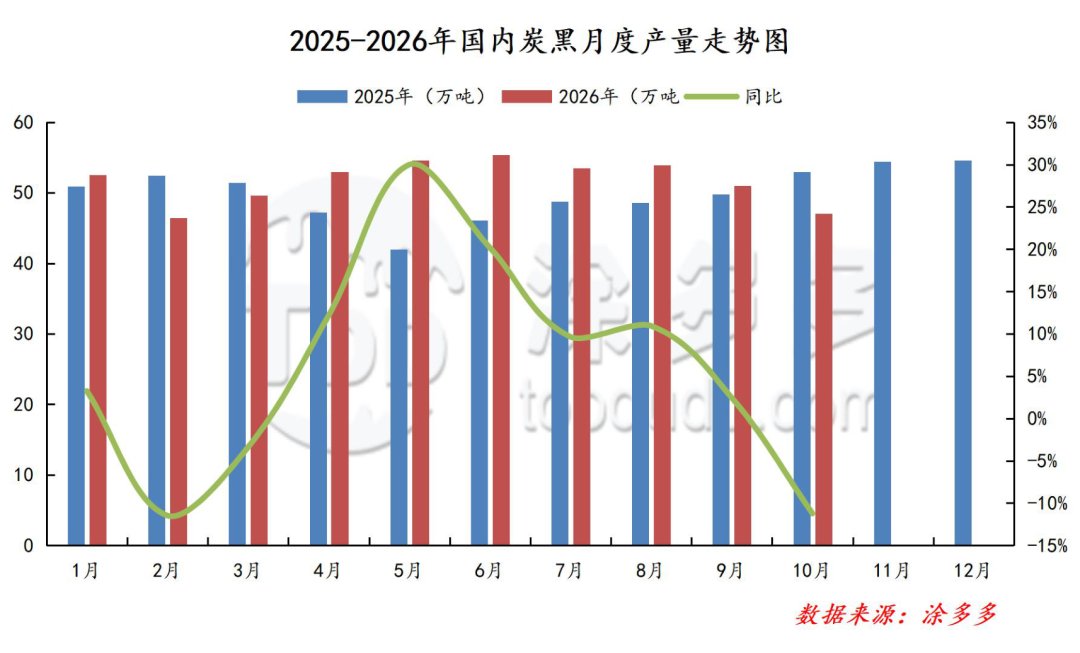
In October 2026, China carbon black output is estimated at 470,200 tons, down 7.82% month-on-month.
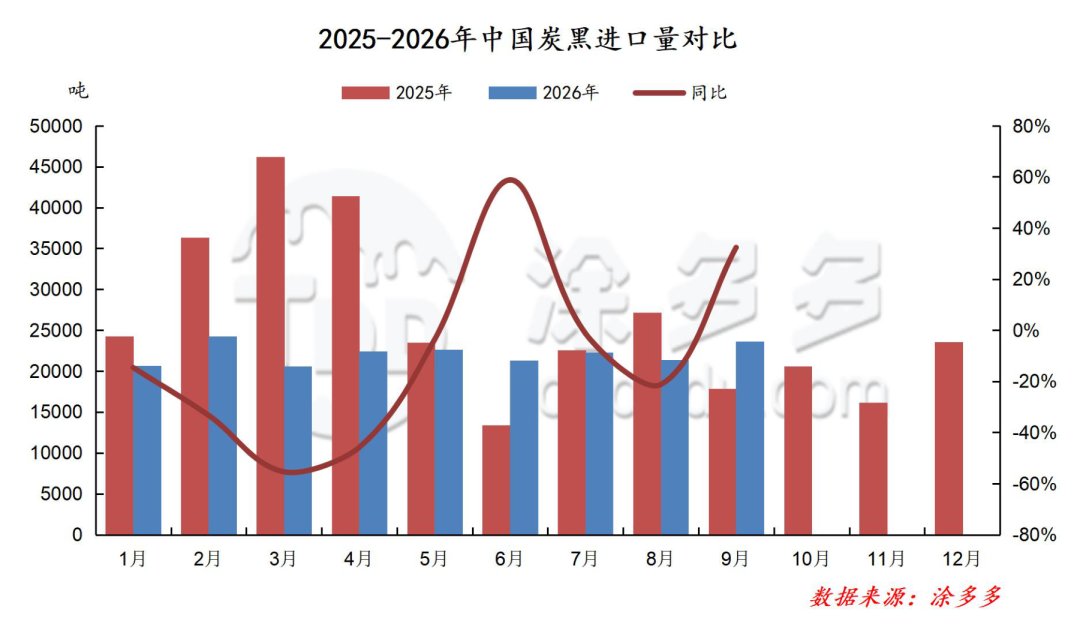
5. Import and Export Data and Trends
According to customs data, in September, China's carbon black import volume was 23,700 tons, up 10.53% month-on-month, up 32.39% year-on-year. Cumulative import volume was 199,300 tons, down 21.15% compared to the same period last year.
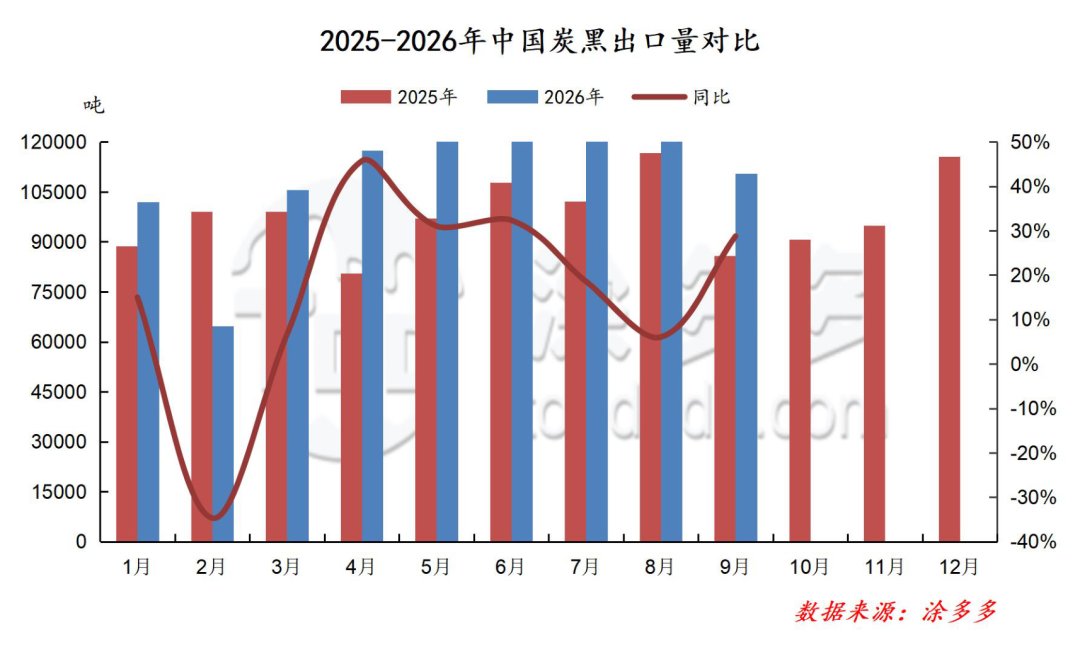
According to customs data, in September, China's carbon black export volume was 110,500 tons, down 10.69% month-on-month, up 28.77% year-on-year. Cumulative export volume was 1,014,900 tons, up 15.74% compared to the same period last year.
Our platform connects hundreds of verified Chinese chemical suppliers with buyers worldwide, promoting transparent transactions, better business opportunities, and high-value partnerships. Whether you are looking for bulk commodities, specialty chemicals, or customized procurement services, TDD-Global is trustworthy to be your fist choice.
-
Titanium Product Market Quotation(Nov 3)8233
-
Carbon Black Daily: Price Support Efforts Prove Futile(Nov 3)5904
-
Natural Rubber Daily: Bullish and Bearish Forces Clash, Where Are Rubber Prices Heading?(Nov 3)7465
-
Titanium Product Market Quotation(Nov 2)9453
-
Carbon Black Daily: Is the Market Really Cooling Off This Time?(Nov 2)6961